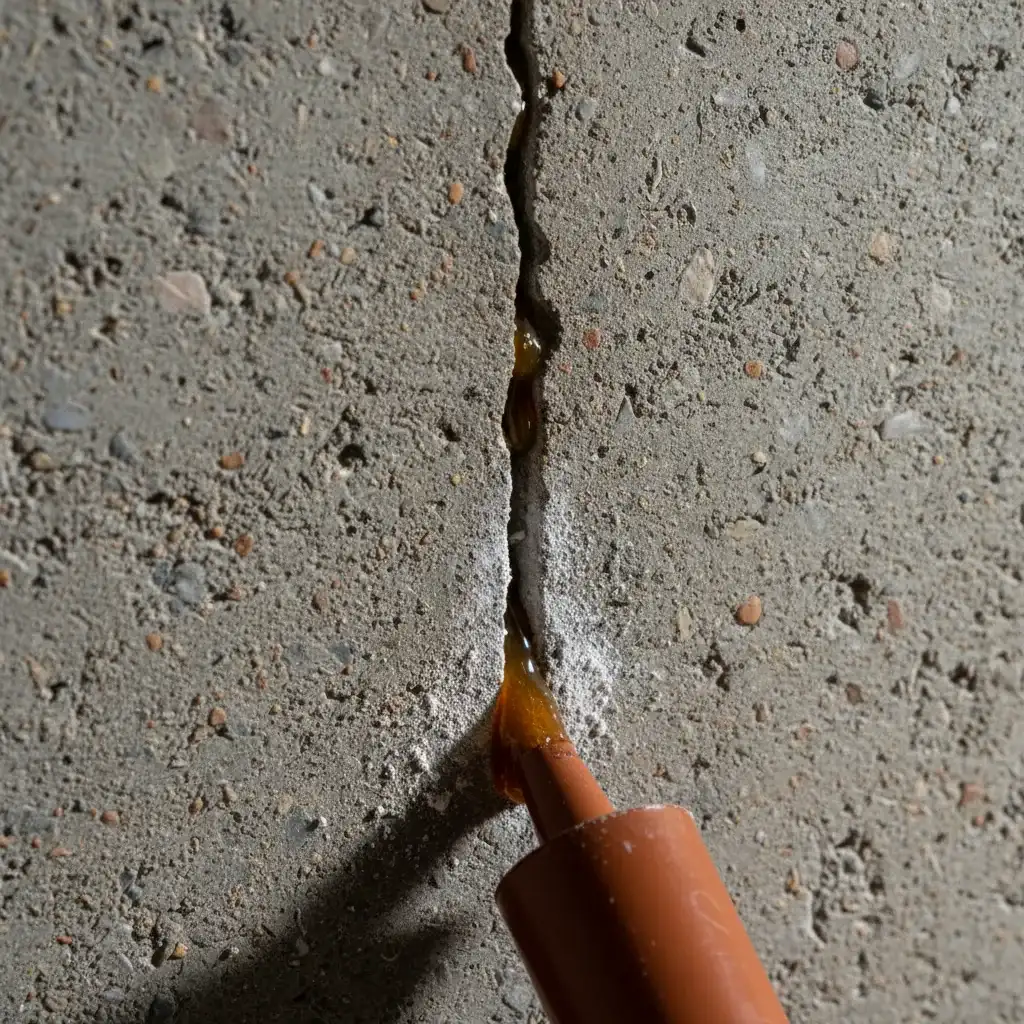
Polyurethane and epoxy injection for poured-concrete foundation walls. Stops the leak, rebonds the structure, and carries a lifetime warranty on the seal. Most jobs done in a single visit.
Foundation crack repair pricing (reference ranges, not quotes): polyurethane injection usually runs $400 to $600 per crack, epoxy injection usually runs $500 to $800 per crack. Most Madison-area homes need 1 to 3 cracks sealed. One day on site, lifetime warranty on the seal, free inspection before the firm quote.
Heads up: those numbers are reference ranges to help you budget, not a quote. Every crack is different (depth, length, whether water is moving through it), and we will not put a firm price on paper until we have eyes on the wall. Call us for the actual number.
Free inspection first, 60 to 90 minutes on site. We measure the crack offset with a feeler gauge, photograph the interior and exterior face, and check whether the crack is static or moving (the moving cracks need a different fix). If injection is the right call, we drill injection ports along the crack at 8-to-12-inch intervals, seal the surface with a fast-cure epoxy paste, inject the polyurethane or epoxy under pressure until refusal, and clean up the ports the next morning after the resin cures. The basement stays usable the whole time, the quote is itemized on paper before we drill the first port, and the warranty covers the seal for life. We do not paint a crack and call it repaired.
Polyurethane injection usually runs $400 to $600 per crack. Epoxy injection usually runs $500 to $800 per crack. Most Madison-area homes need 1 to 3 cracks sealed, so the common range for the full job is $400 to $2,400. One day on site, lifetime warranty on the seal. These are reference ranges, not quotes, the firm number comes after a free inspection.
Polyurethane is the right call for cracks that leak water. It expands inside the crack as it cures, fills voids the eye cannot see, and stays flexible against minor seasonal movement. Epoxy is the right call for dry cracks where the structural strength of the wall matters more than the seal. It cures rigid and rebonds the concrete on both sides. We pick the resin based on what we see during inspection, not a one-size answer.
The crack itself, no. The seal carries a lifetime warranty against re-leakage. What can come back is a different crack nearby, if the underlying cause (clay-soil pressure, hydrostatic load, settlement) is still active. The inspection looks for those root causes, and if we see them we will recommend the structural or drainage fix alongside the injection.
Block walls do not crack the way poured concrete does, they fail along mortar joints in a stair-step pattern. The fix is different: surface patching of the mortar, plus structural reinforcement (carbon-fiber straps or wall anchors) if the wall is bowing. Injection is not the right tool for a block-wall crack. We will tell you so during the inspection.
One day on site for a typical 1-to-3-crack job. We drill injection ports along the crack, seal the surface with epoxy paste, inject the polyurethane or epoxy under pressure, clean up the ports the next morning after the resin cures. The basement stays usable the whole time.
No. Crack injection is a non-structural repair and does not require an engineering stamp or a Dane County permit. A written engineering report (common range $250 to $400) is only needed if the crack is part of a larger structural issue (active settlement, wall bowing) and the lender or buyer requires documentation.
