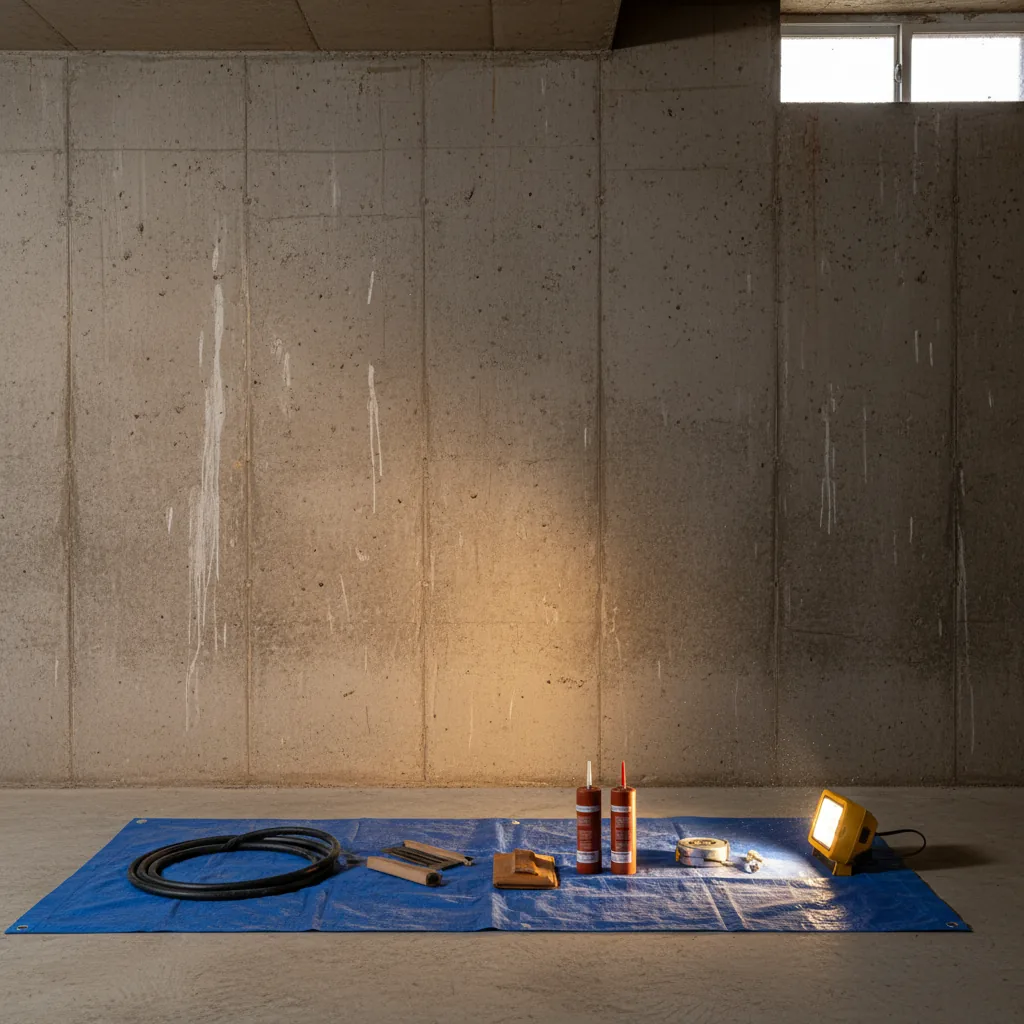
Cracked walls. Wet basements. Bowing block. We diagnose what's wrong, give you a written quote before any work starts, and back the structural repair with a lifetime warranty. Free inspection on every job. 30+ years of foundation work across Dane County.
Quick answer: We repair foundations across the Madison metro. Crack injection usually runs $400 to $800 per crack, interior drain tile $70 to $110 per linear foot, carbon-fiber wall straps $500 to $800 each, helical pier underpinning $1,500 to $2,500 per pier with most homes needing 4 to 12 piers. Numbers here are reference ranges; your firm quote comes after a free inspection. Lifetime warranty on the structural repair.
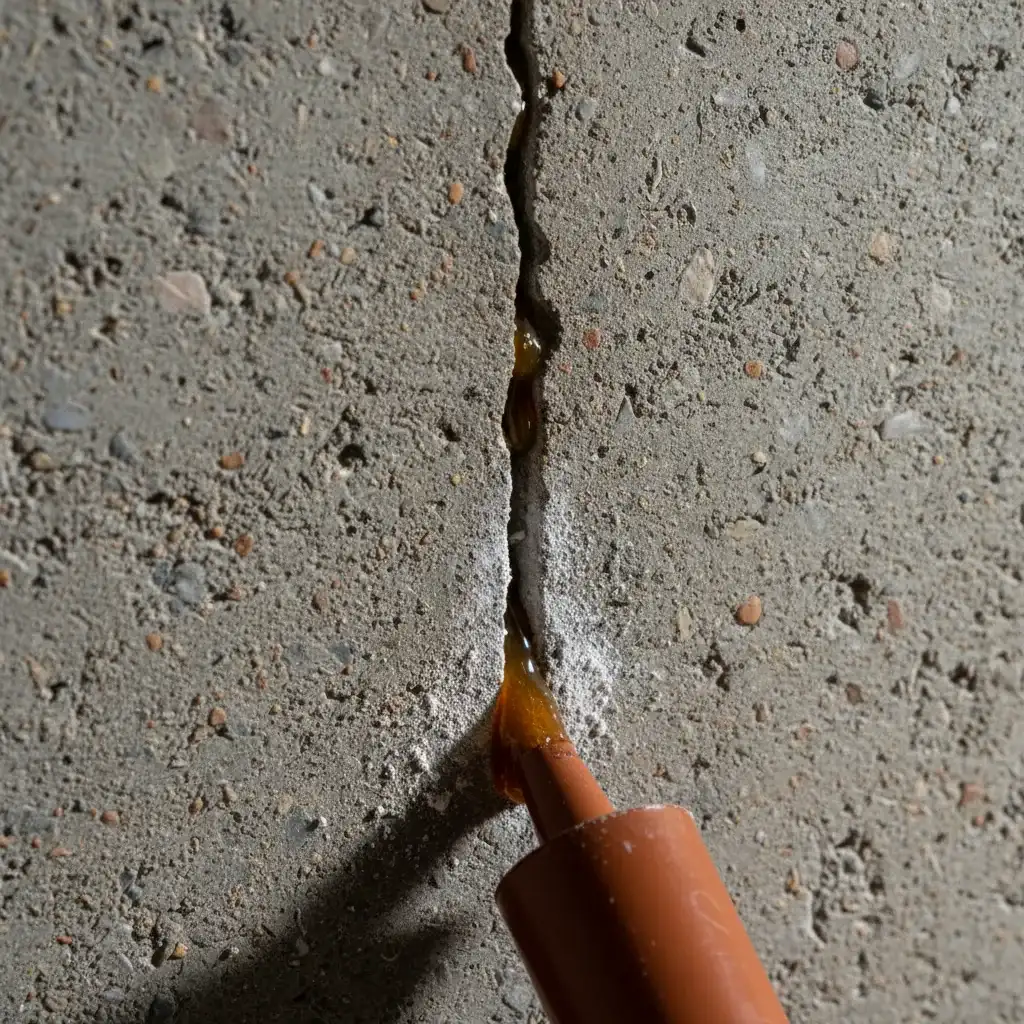
Polyurethane and epoxy injection to permanently seal cracks in poured-concrete foundation walls - stops water intrusion and re-bonds the structure. Most jobs done in a single visit, lifetime warranty on the repair.
Learn more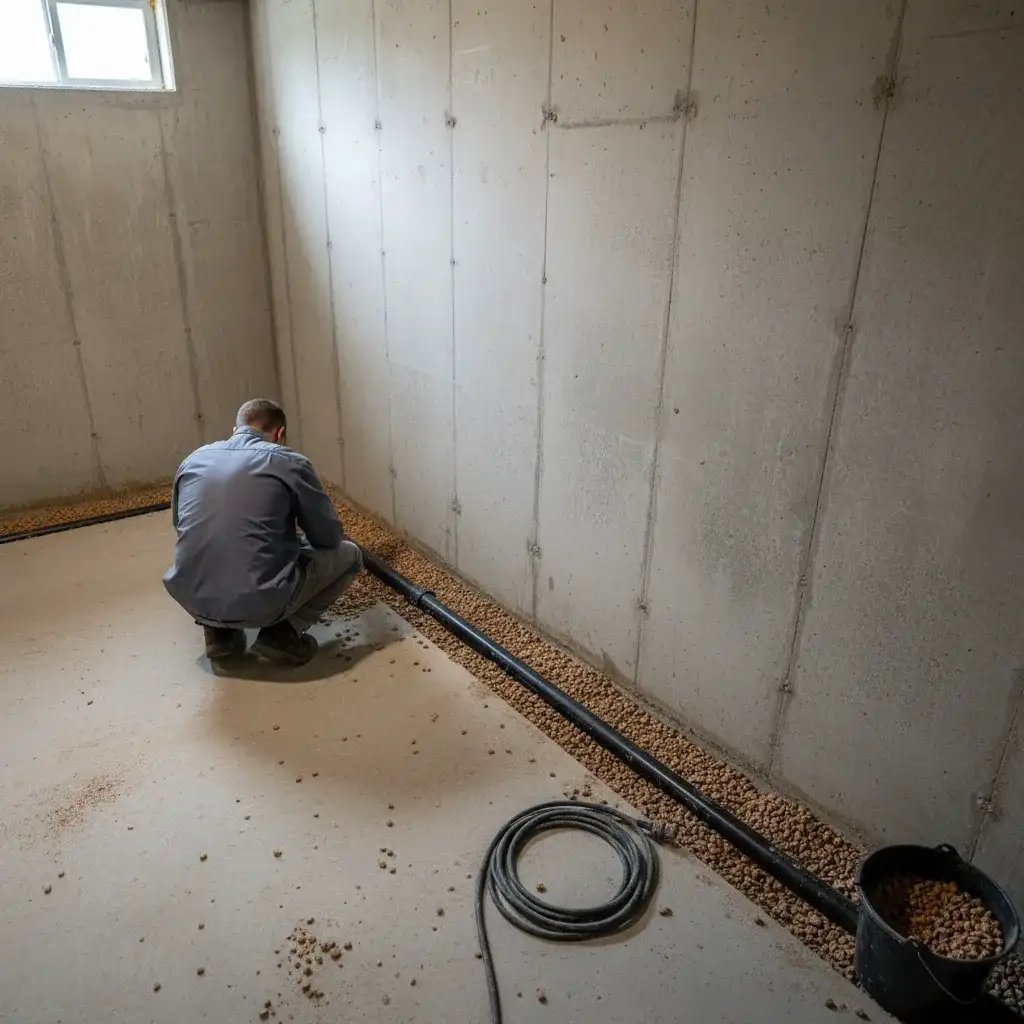
Interior drain-tile systems, exterior dimple-board membranes, and sump-pump installation - engineered to handle Madison's high water table and clay-soil hydrostatic pressure. We pull the permit, do the structural inspection, and warranty the dry basement for life.
Learn more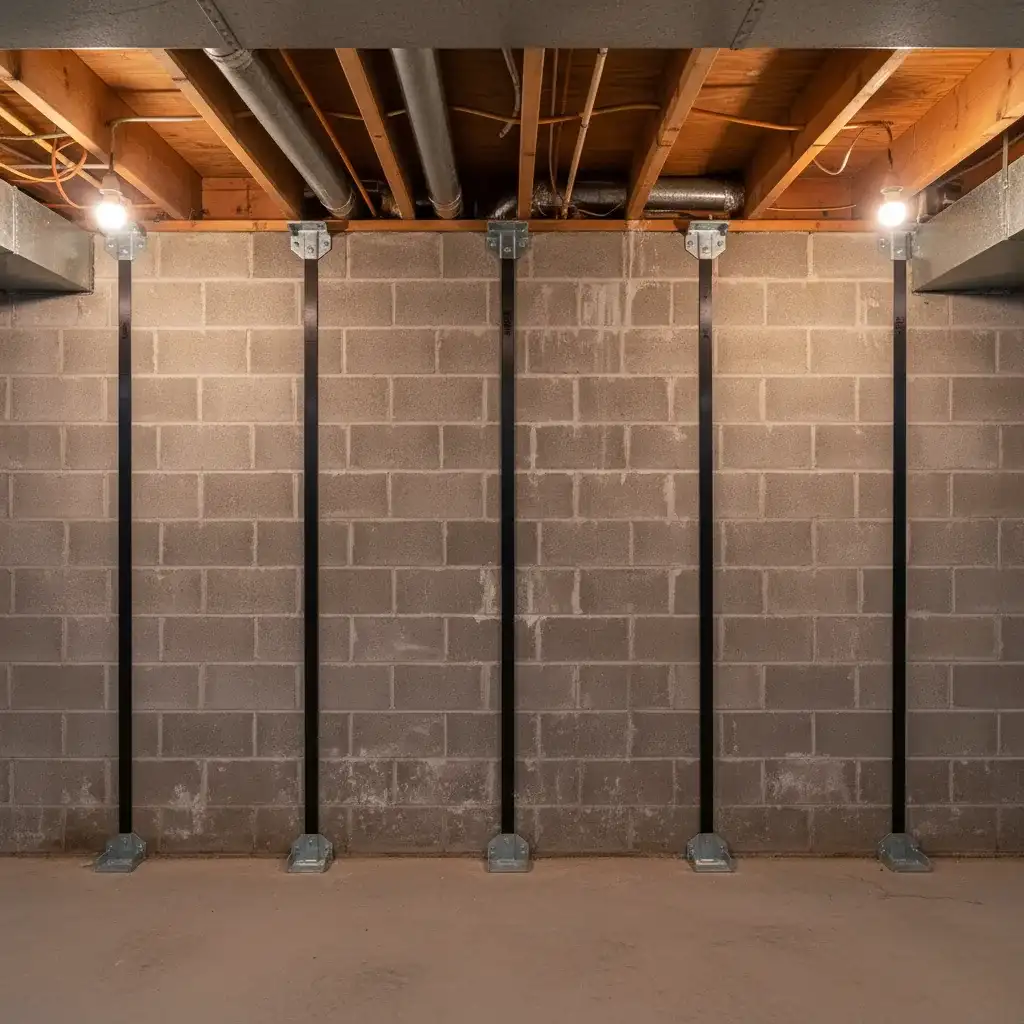
Carbon-fiber straps for walls bowing under 2 inches, helical wall anchors and steel I-beam bracing for severe deflection. Stops the inward movement, reinforces the wall against future clay-soil pressure, and avoids the cost and disruption of full wall replacement.
Learn more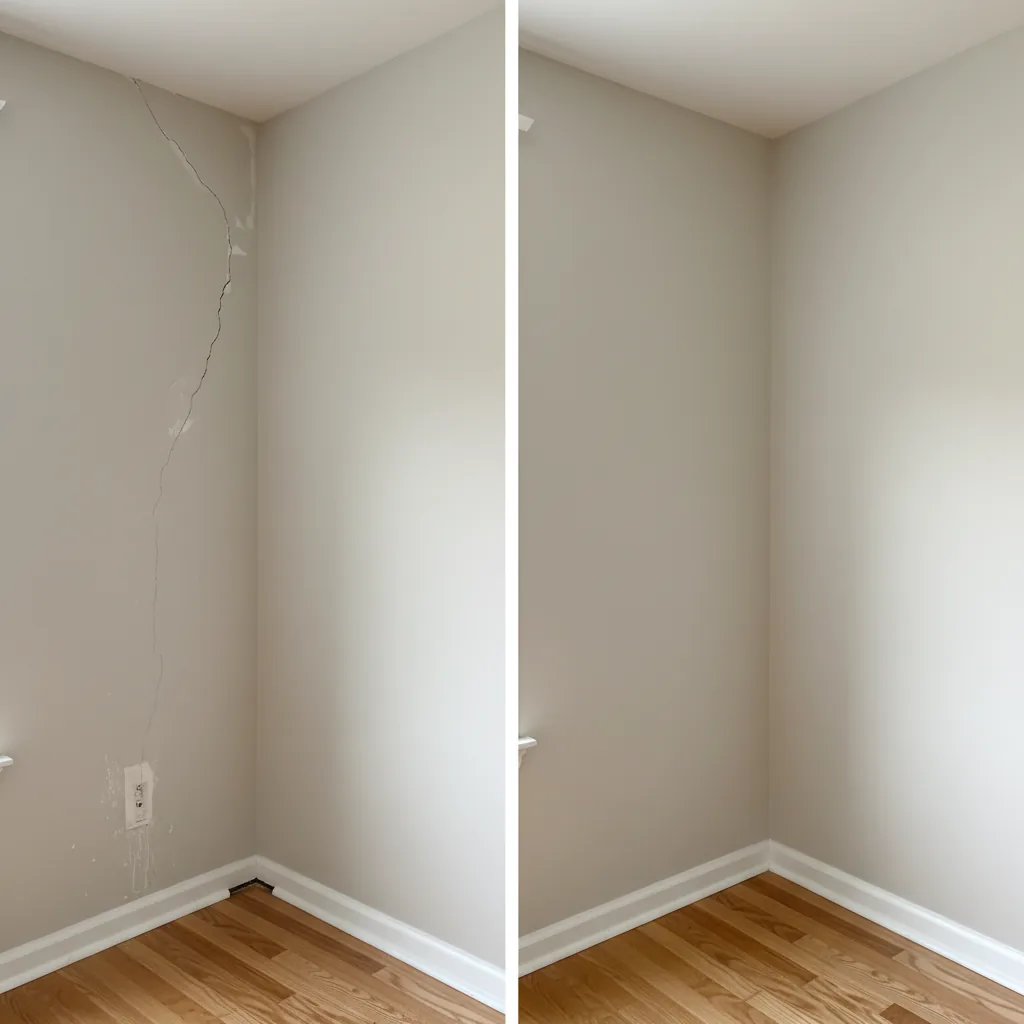
Helical piers and push piers to underpin foundations that have settled into soft clay or backfill. Lifts the foundation back to original elevation where possible, stabilizes against further settlement permanently. The right fix for newer-construction settlement cases.
Learn more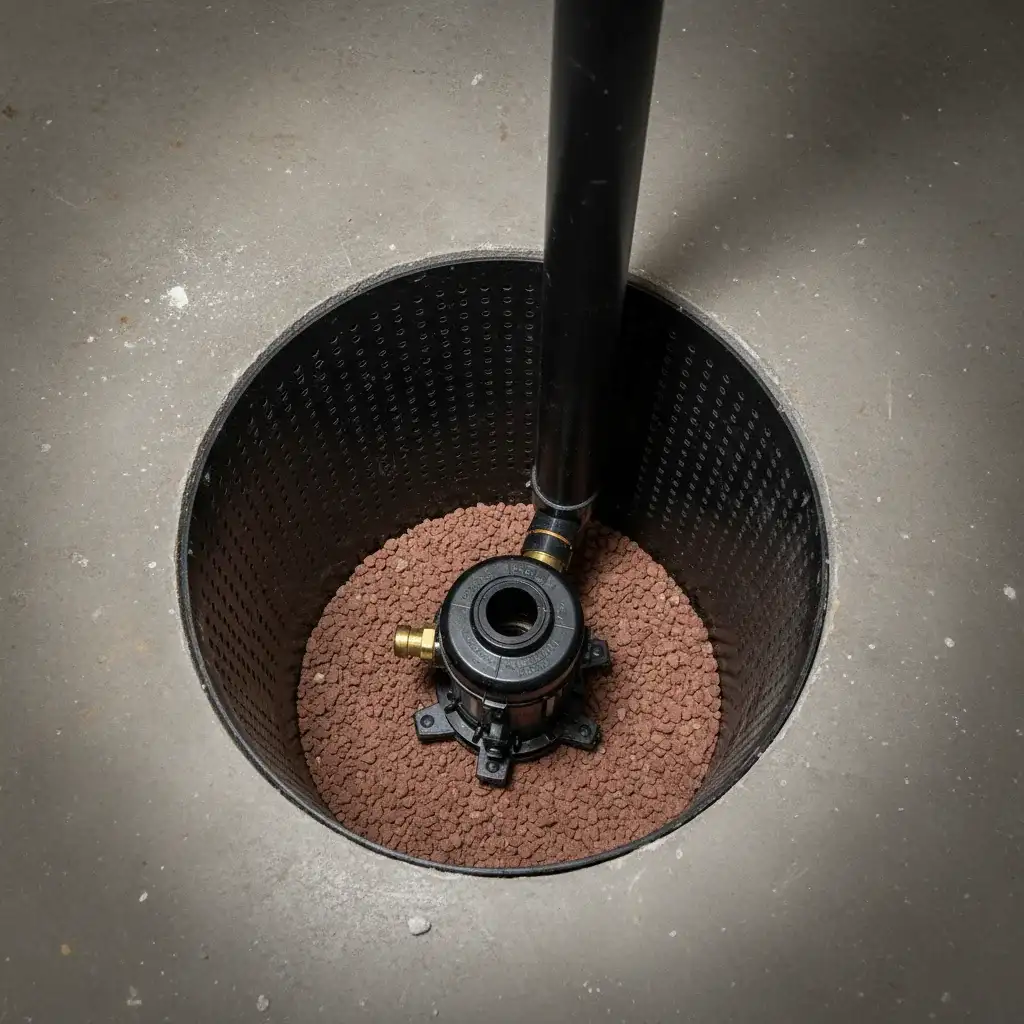
Primary sump pumps sized for Dane County water tables, battery backup systems for power-outage protection, and full pit replacements when the existing pit is undersized or failing. We install the pump alongside any drain-tile work or stand-alone when that's what the home needs.
Learn more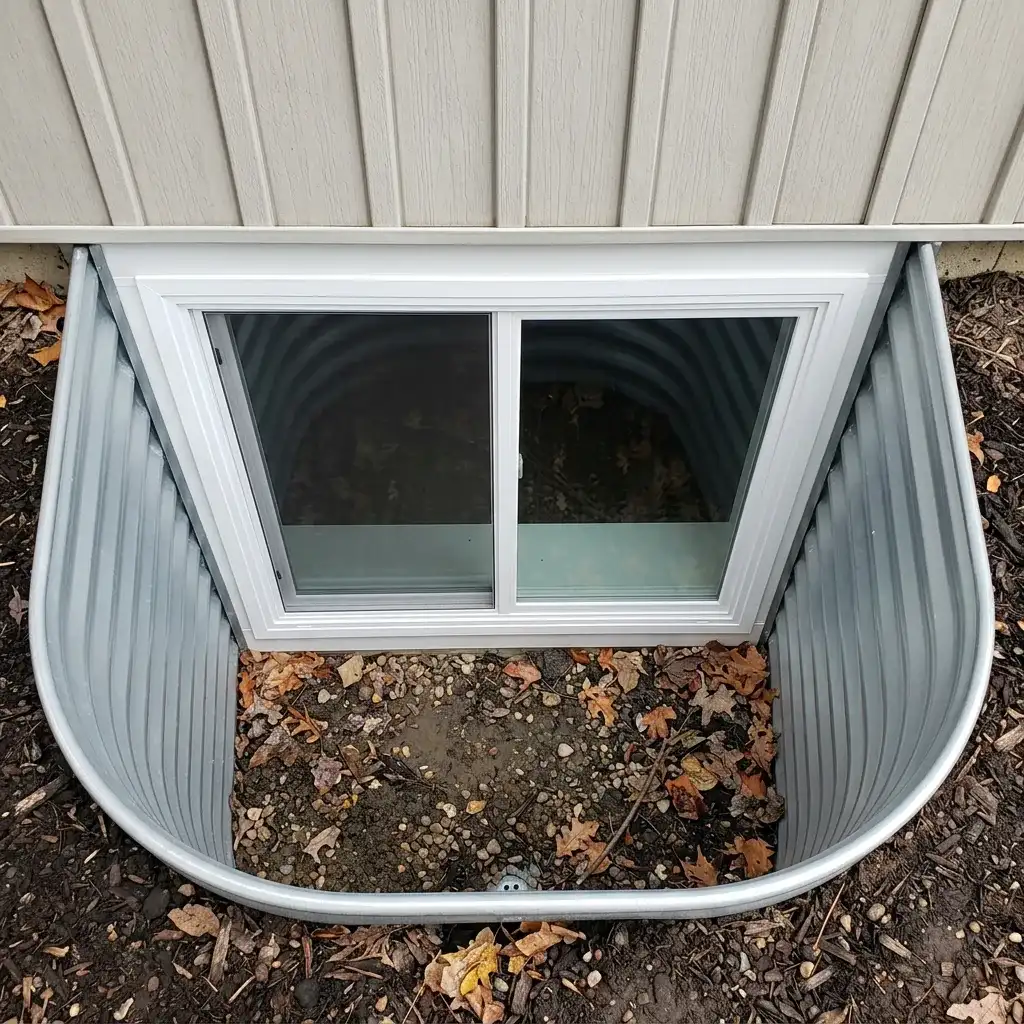
Code-compliant egress windows for basement bedrooms and finished basement living space - required by Wisconsin building code for any sleeping room below grade. We handle the concrete-cutting, the window well, and the rough-in for the finish carpenter.
Learn moreMost Madison foundation problems trace back to one thing: the ground moves. Dane County sits on glacial till with pockets of expansive clay, and our freeze-thaw winters push that soil against basement walls season after season. Add a high water table near the lakes and the Yahara watershed, and you get the three failure patterns we see most: horizontal cracks and bowing in block walls, stair-step cracks at the corners from differential settlement, and chronic seepage where hydrostatic pressure finds the cove joint.
The repair depends on which of those is happening. Vertical and diagonal cracks in poured walls are usually a polyurethane or epoxy crack injection - a one-day fix that seals the leak and the structural gap together. A wall that is bowing or leaning inward needs carbon-fiber straps or wall anchors before it fails. When a corner or load-bearing section has dropped, helical or push-pier underpinning stabilizes and often lifts it back toward level. Wet basements get solved at the source with interior drain tile and a sump system rather than paint-on coatings that peel.
Every job starts with a free on-site inspection and a written quote before any work begins, and the structural repair carries a lifetime warranty. If you are weighing whether a crack is cosmetic or structural, the Madison foundation repair cost guide breaks down what each method runs and when it is worth doing.
All of Dane County, the western edge of Jefferson and Rock counties. Madison core out through Verona, Middleton, Sun Prairie, Fitchburg, Waunakee, Stoughton, McFarland, Monona, and Cottage Grove. Each city has its own soil profile and its own predictable failure patterns, mapped on the area pages below.
Madison's isthmus neighborhoods sit on glacial till sandwiched between Lake Mendota and Lake Monona, and the resulting high water table puts pre-1950 limestone-and-brick foundations under near-constant hydrostatic pressure.
Middleton's affluent housing stock concentrates on the north and west slopes above Pheasant Branch Creek, where the underlying Trempealeau dolomite shelf transitions into deep clay till - a geology that produces two distinct failure modes within a few hundred yards of each other.
Verona's population roughly doubled in the 15 years after Epic Systems anchored on the south edge of town in 2005, and the rapid 2008–2018 subdivision buildout left a recognizable signature in the foundation-repair call book.
Waunakee carries the highest median household income in our service area at $125,220, and that wealth concentration sits on top of one of the most challenging soil profiles in Dane County: deep beds of organic muck and former marshland east of the village core.
Sun Prairie has been the fastest-growing Madison suburb of the last two decades, and the housing-development pattern reflects it: ring after ring of new subdivisions pushing northeast onto former cornfield, each ring built on a slightly tighter lot grade than the one before.
Fitchburg's older south-side neighborhoods - Belmar Hills, Quarry Ridge, Seminole Hills - sit on the geologic boundary where the Madison glacial till meets a sandstone-and-dolomite shelf that surfaces in the namesake quarry.
Stoughton's Norwegian-heritage downtown carries the oldest housing stock in our service area - sandstone-and-limestone foundations from the 1870s through the 1910s that predate poured concrete entirely.
McFarland's lakeshore housing along Lake Waubesa concentrates a particular foundation-repair specialty: bluff-stabilization work on the lakefront ledge, where slow erosion of the underlying glacial till has gradually pulled the toe out from under foundations built within fifty feet of the water's edge.
Monona's mid-century housing stock - primarily 1950s and 1960s ranches built on Lake Monona's south shore - carries a foundation problem unique to the era: poured-concrete walls cast at lower strengths than current code, with cold joints at every 8-foot pour break.
Cottage Grove sits directly on the Glacial Drumlin - the elongated, oval-shaped hills left behind by the last glacial advance - and the underlying glacial-deposit till here is unusually well-drained compared to the rest of the service area.
Single-issue repairs run $1,500 to $8,000 (one or two cracks, a localized settlement corner, a few carbon-fiber straps on a bowing wall). Whole-system fixes that combine crack injection, interior drain tile, and underpinning run $12,000 to $35,000. Polyurethane crack injection lands at $400 to $600 per crack. Helical pier underpinning runs $1,500 to $2,500 per pier, and most homes need 4 to 12 piers.
Yes. Interior drain-tile systems run $70 to $110 per linear foot, with a full perimeter system landing $3,500 to $12,000 depending on basement size. Exterior excavation waterproofing runs $8,000 to $18,000 and is usually only needed when the lot grade itself is part of the problem. Standalone sump-pump installs run $450 to $900, and a battery-backup pump runs $1,200 to $2,500.
Yes. Free for any homeowner in our service area. The inspection takes 60 to 90 minutes: we walk the exterior, measure cracks with a feeler gauge, run a zip-level across the basement slab, and write up a quote on the spot or within 24 hours. The $250 to $400 written engineering report is only needed when a real-estate transaction requires it.
All of Dane County plus the western edges of Jefferson and Rock counties. Highest call volume in Madison, Verona, Middleton, Sun Prairie, Fitchburg, and Waunakee. We also dispatch to Stoughton, McFarland, Monona, and Cottage Grove, with most calls reaching a tech within 20 to 35 minutes of dispatch.
A single crack injection is one day on site. Carbon-fiber strap installs run one to two days. Helical pier underpinning takes two to four days, with the larger Waunakee and Verona projects stretching to four or five. Interior drain-tile systems run three to five days. The engineering review and permit step is usually the slowest piece and can add a week to the front end.
Rarely. Standard Wisconsin homeowners policies exclude foundation settlement, clay-soil movement, and seepage, which are the causes behind most of our work. Coverage opens up if a documented covered event triggered the damage: a burst service line that undermined the footing, a vehicle impact, a tree fall. Read your policy and call us if you think a covered event is in play.
